02 / The People

Pgaz K'Nyau · Hin Lad Nai

A community that wrote the rules of its own forest.

Overview

Hin Lad Nai is not a village that happens to sit beside a forest. It is a community in which managing the forest is part of the social structure. The rules covering what may be gathered, what may be used and what is off limits are set by the people who live directly with the consequences of those rules.
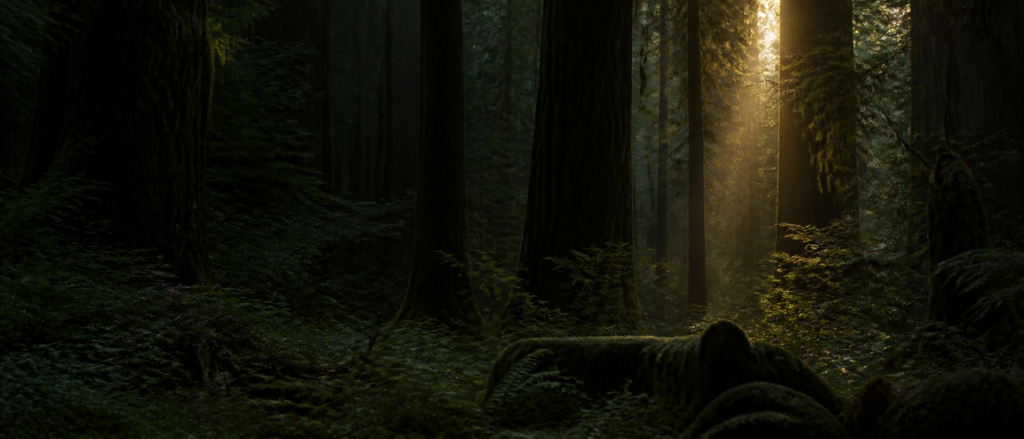
ป่าลึกยามแสงต่ำ ชั้นพืชซ้อนกัน มีลำแสงทองส่องผ่าน

01 / Rules

Rules the community enforces on itself.

In this system the forest is not filed as a resource waiting to be taken out. It is the base that lets everything else happen. The community's rules are therefore not written to limit use, but to protect the ability to use it again next year.

The consequence is that caring for the forest here is not an activity separate from making a living. It is the same condition.

02 / Rotation

Rotational farming, the thing most often misread from outside.
Rotational farming is usually read from outside as clearing forest, which is a reading made on the wrong unit of time. The system runs on a fallow cycle longer than the cropping cycle. A plot is used and then left to recover — not used and then permanently converted.

The difference between those two is the difference between a forest that can come back and one that cannot.

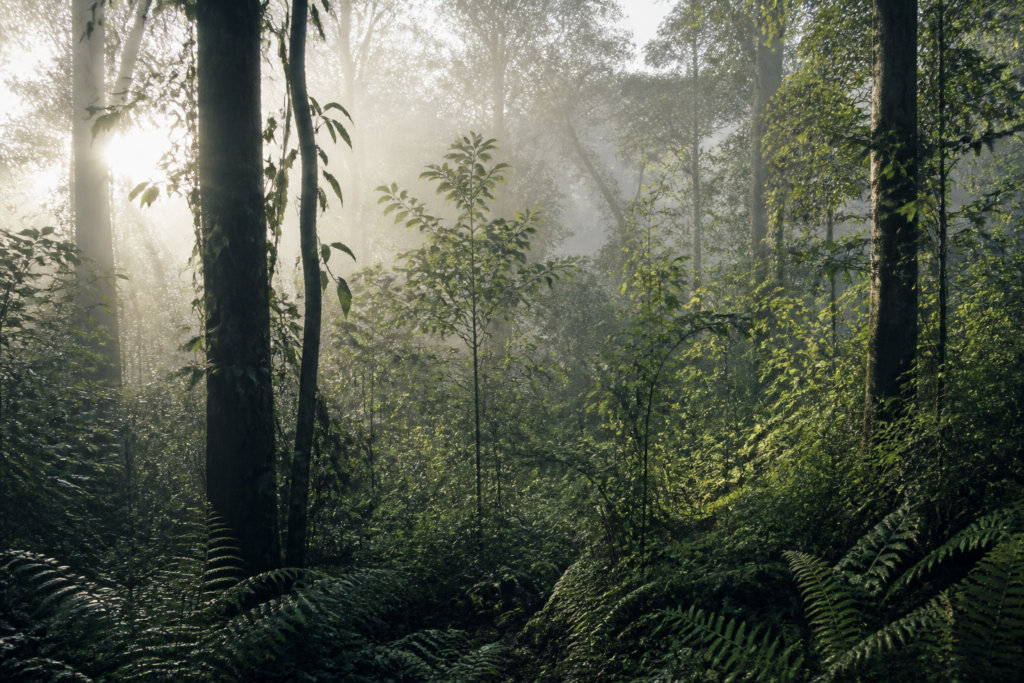
ป่าที่กำลังฟื้นตัว ไม้รุ่นใหม่ขึ้นแทรกในหมอกเช้า

03 / Firebreak

Firebreaks that have to be cut again every year.

Before the dry season each year the community cuts firebreaks around the forest area. The whole thing has to be done again from the start every year. There is no shortcut, and nobody else arrives to do it.

This is the most concrete form conservation takes in this context — not a declaration, but real labour repeated annually.

04 / History

What happened before this.

Between 1986 and 1988 this area was affected by logging concessions and large-scale timber extraction. The community's own reading is that what was lost was not only trees, but the cultural relationship between the community and the forest that had been built before that.

Afterwards the community also had to deal with reserved-forest boundaries drawn over the land and the insecurity that came with them. That history is why the forest is not an abstract subject here.

Grow without clearing.

Plant without opening the canopy — the second rule of the same system.

things the forest taught us — ep. 02

Next

From forest to formula.

The five stages that happen after the material leaves the forest, and what the lab is there to preserve.

See the process
Scroll to Top